Most businesses don’t think about website security until something goes wrong.
A sudden website crash. Customer data exposed. Google marking your site as “Not Secure.” Or worse — your website being completely taken over.
By the time these issues appear, the damage is already done.
In 2026, cyber threats are no longer limited to large enterprises. Small and medium businesses are now the primary targets — not because they are more valuable, but because they are often less protected.
This guide explains why website security matters more than ever, what risks businesses face today, and how to protect your website with practical, actionable steps.
Why SMBs Are the Biggest Target Today
There’s a common misconception that hackers only target big companies. The reality is very different.
- 43% of cyber attacks target small businesses
- Most SMB websites lack basic security measures
- Automated bots scan thousands of websites daily for vulnerabilities
Hackers don’t need to “choose” your business. If your website is vulnerable, it will be found.
What Happens When Your Website Is Not Secure
The impact of poor security goes far beyond technical issues:
- Loss of customer trust — users won’t return to a compromised site
- SEO penalties — Google may blacklist your website
- Data breaches — customer or business data can be exposed
- Revenue loss — downtime directly affects leads and sales
- Brand damage — reputation takes a long time to recover
Security is not just about protection — it’s about business continuity.
Common Website Security Threats in 2026
1. Malware Attacks
Malicious code injected into your website that can steal data, redirect users, or damage your system.
2. Brute Force Login Attacks
Automated attempts to guess usernames and passwords, especially on admin panels.
3. SQL Injection
Attackers exploit vulnerabilities in forms or URLs to access your database.
4. Cross-Site Scripting (XSS)
Injection of scripts that affect users visiting your site.
5. Outdated Software Vulnerabilities
Old plugins, themes, or frameworks are one of the most common entry points for attacks.
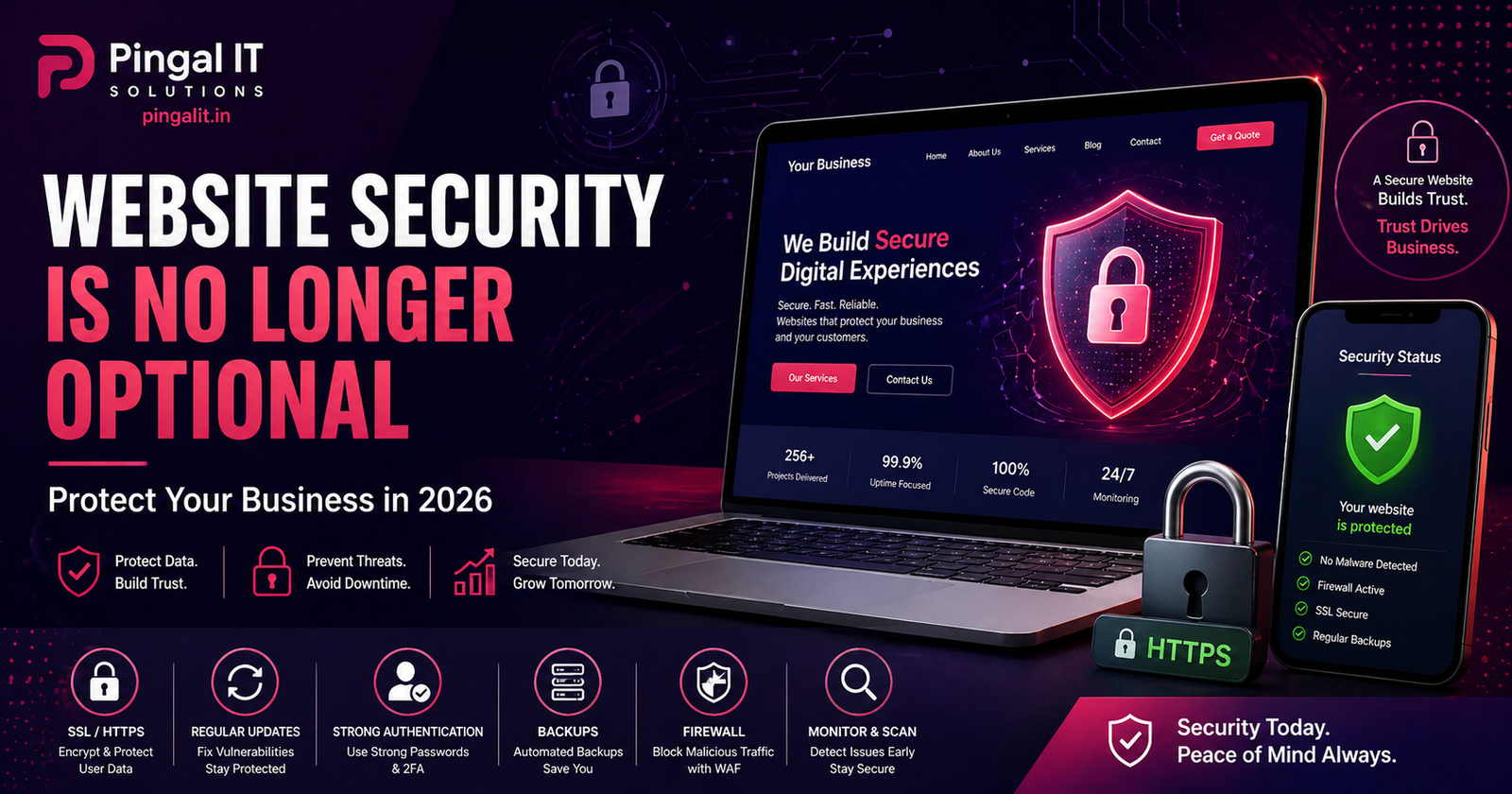
7 Practical Ways to Secure Your Website
1. Use HTTPS (SSL Certificate)
This is the most basic requirement. HTTPS encrypts data between your website and users, protecting sensitive information.
2. Keep Everything Updated
Regularly update your CMS, plugins, libraries, and frameworks to patch known vulnerabilities.
3. Strong Authentication
Use strong passwords and enable two-factor authentication (2FA) wherever possible.
4. Regular Backups
Automated backups ensure you can quickly restore your website if something goes wrong.
5. Limit Admin Access
Only give admin access to necessary users. Reduce exposure wherever possible.
6. Use a Web Application Firewall (WAF)
A WAF helps block malicious traffic before it reaches your server.
7. Monitor and Scan Regularly
Regular security scans help detect vulnerabilities before attackers exploit them.
Security vs Cost — A Business Perspective
Many businesses delay investing in security to save costs. But the numbers tell a different story:
| Scenario | Cost Impact |
|---|---|
| Basic security setup | Low, one-time or minimal recurring cost |
| Website hacked | Recovery + lost business + reputation damage |
| Data breach | Legal + financial + trust loss |
Security is not an expense — it’s a risk management investment.
How Pingal IT Solutions Secures Business Websites
At Pingal IT Solutions, security is integrated into every stage of development — not added as an afterthought.
We focus on:
- Secure coding practices
- Regular vulnerability checks
- Optimized server configurations
- Access control and monitoring
Our goal is simple: build websites that are not only fast and scalable, but also secure and reliable.
Conclusion
In 2026, website security is no longer optional. It is a fundamental requirement for any business operating online.
Ignoring security doesn’t mean avoiding risk — it means accepting it.
If your website hasn’t been audited recently, now is the time.
Talk to Pingal IT Solutions — we’ll review your website security, identify vulnerabilities, and help you build a safer digital presence.